<?xml version="1.0" encoding="utf-8"?>
<rss version="2.0">
<channel><title>Wounds International - All articles</title>
<link>http://www.woundsinternational.com/rss/all</link>
<description></description>
<language>en-gb</language>
<pubDate>Wed, 23 May 2012 03:35:21 +0100</pubDate>
<lastBuildDate>Wed, 23 May 2012 03:35:21 +0100</lastBuildDate>
<docs>http://blogs.law.harvard.edu/tech/rss</docs>
<generator>Ol' Muggins Here...</generator>
<ttl>5</ttl>
<item>
<title><![CDATA[The human cost of living with a wound]]></title>
<link>http://www.woundsinternational.com/article.php?articleid=10383&amp;page=1</link>
<guid>http://www.woundsinternational.com/article.php?articleid=10383&amp;page=1</guid>
<pubDate>Mon, 21 May 2012 00:00:00 +0100</pubDate>
<description><![CDATA[Time does indeed fly. It seems an age ago that I was in Cape Town attending a roundtable discussion, which was part of a project aimed at providing consensus on patient wellbeing. In fact, the conference only took place in January 2011, but the flood of developments in wound care since then shows how fast-moving this specialty of ours has become.  
]]></description>
</item>
<item>
<title><![CDATA[Day in the life 3(2)]]></title>
<link>http://www.woundsinternational.com/article.php?articleid=10384&amp;page=1</link>
<guid>http://www.woundsinternational.com/article.php?articleid=10384&amp;page=1</guid>
<pubDate>Mon, 21 May 2012 00:00:00 +0100</pubDate>
<description><![CDATA[This issue features Margaret Mungai, a wound care nurse at Moi Teaching and Referral Hospital in Kenya. ]]></description>
</item>
<item>
<title><![CDATA[A synthetic skin scaffold to treat full-thickness wounds]]></title>
<link>http://www.woundsinternational.com/article.php?articleid=10385&amp;page=1</link>
<guid>http://www.woundsinternational.com/article.php?articleid=10385&amp;page=1</guid>
<pubDate>Mon, 21 May 2012 00:00:00 +0100</pubDate>
<description><![CDATA[An independent UK-based charity has spent several years developing a synthetic ‘off-the-shelf’ skin scaffold which could prove effective at wound healing. The charity, known as RAFT (the Restoration of Appearance and Function Trust), is unique among many medical charities in the sense that it raises money for its own research institute and team of researchers.]]></description>
</item>
<item>
<title><![CDATA[The impact of traditional treatments on wound care in sub-Saharan Africa]]></title>
<link>http://www.woundsinternational.com/article.php?articleid=10272&amp;page=1</link>
<guid>http://www.woundsinternational.com/article.php?articleid=10272&amp;page=1</guid>
<pubDate>Thu, 23 Feb 2012 00:00:00 +0000</pubDate>
<description><![CDATA[Francis Ojok, 
Bua Emmanuel and Regina Akise discuss the findings of their study into the problems clinicians face when dealing with traditional remedies]]></description>
</item>
<item>
<title><![CDATA[SNaP® Wound Care System Made Easy]]></title>
<link>http://www.woundsinternational.com/article.php?articleid=10267&amp;page=1</link>
<guid>http://www.woundsinternational.com/article.php?articleid=10267&amp;page=1</guid>
<pubDate>Wed, 22 Feb 2012 00:00:00 +0000</pubDate>
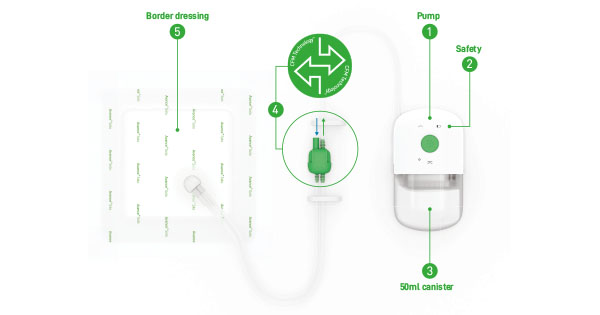
<description><![CDATA[The treatment of wounds with negative pressure wound therapy (NPWT) has revolutionised practice over the past decade. However, implementation of therapy can be a difficult process for both clinicians and patients —conventional NPWT devices often require a lengthy procurement process to obtain rental units, and complex dressing applications. This document discusses the use of the SNaP® Wound Care System (Spiracur Inc, Sunnyvale, USA), an ultraportable NPWT system for ambulatory and active patients. This system is easy to use, accessible, and may allow earlier discharge from hospital, helping to reduce costs and improve quality of life.]]></description>
</item>
<item>
<title><![CDATA[Askina® Calgitrol® Made Easy]]></title>
<link>http://www.woundsinternational.com/article.php?articleid=10266&amp;page=1</link>
<guid>http://www.woundsinternational.com/article.php?articleid=10266&amp;page=1</guid>
<pubDate>Wed, 22 Feb 2012 00:00:00 +0000</pubDate>
<description><![CDATA[Silver has considerable antimicrobial activity, even against many antibiotic-resistant strains of bacteria, and in recent years has increasingly been used in wound dressings to reduce bacterial bioburden[1]. Silver may be incorporated into dressings in a number of different forms, most notably as elemental silver or in the ionic state. Ag+ is the ionic form, which has been demonstrated to have a broad antimicrobial effect[2]. This document describes the mode of action, supporting evidence and practical application of a range of silver products (Askina® Calgitrol®), all of which contain ionic silver in the form of a patented silver alginate matrix.]]></description>
</item>
<item>
<title><![CDATA[Skin Tears Made Easy]]></title>
<link>http://www.woundsinternational.com/article.php?articleid=10142&amp;page=1</link>
<guid>http://www.woundsinternational.com/article.php?articleid=10142&amp;page=1</guid>
<pubDate>Fri, 11 Nov 2011 00:00:00 +0000</pubDate>
<description><![CDATA[Skin tears occur in those with fragile skin, including neonates and more frequently in the elderly. Some skin tears are unavoidable but many are considered to be preventable1.  It is important that clinicians have a good understanding of the effects of ageing on the skin and take appropriate measures to reduce the risk of patients developing skin tears. For those with skin tears, good assessment skills and documentation are important for effective management. This article will focus on why skin tears occur, the classification tools available and offers a practical guide to the prevention and management of skin tears. ]]></description>
</item>
<item>
<title><![CDATA[Pressure ulcers and hydrocolloids Made Easy]]></title>
<link>http://www.woundsinternational.com/article.php?articleid=10143&amp;page=1</link>
<guid>http://www.woundsinternational.com/article.php?articleid=10143&amp;page=1</guid>
<pubDate>Fri, 11 Nov 2011 00:00:00 +0000</pubDate>
<description><![CDATA[Pressure ulcers pose a significant challenge to healthcare systems, and subject patients to considerable discomfort, pain and indignity. Although every effort should be made to prevent pressure ulcers, not all can be prevented. This article discusses the role of hydrocolloid dressings in the management of Category/Stage I and II pressure ulcers (Box 1). ]]></description>
</item>
<item>
<title><![CDATA[Rediscovering alginate dressings]]></title>
<link>http://www.woundsinternational.com/article.php?articleid=10390&amp;page=1</link>
<guid>http://www.woundsinternational.com/article.php?articleid=10390&amp;page=1</guid>
<pubDate>Mon, 21 May 2012 00:00:00 +0100</pubDate>
<description><![CDATA[It is approaching 30 years since the first commercially available alginate wound dressing was launched in 1983. This review revisits this group of wound dressings and traces their development, mode of action and use in clinical practice. The author concludes by posing questions about the future for alginate dressings and identifying unanswered questions related to their role in wound healing.]]></description>
</item>
<item>
<title><![CDATA[The important role of debridement in wound bed preparation ]]></title>
<link>http://www.woundsinternational.com/article.php?articleid=10389&amp;page=1</link>
<guid>http://www.woundsinternational.com/article.php?articleid=10389&amp;page=1</guid>
<pubDate>Mon, 21 May 2012 00:00:00 +0100</pubDate>
<description><![CDATA[Although the literature highlights the importance of wound debridement, there is often confusion around selecting the most appropriate method[1]. In addition, concerns around competence and scope of practice are an important factor when discussing this technique[2]. The author aims to clarify the fundamentals of successful debridement in the clinical practice setting.
]]></description>
</item>
<item>
<title><![CDATA[Infection update ]]></title>
<link>http://www.woundsinternational.com/article.php?articleid=10386&amp;page=1</link>
<guid>http://www.woundsinternational.com/article.php?articleid=10386&amp;page=1</guid>
<pubDate>Mon, 21 May 2012 00:00:00 +0100</pubDate>
<description><![CDATA[Wounds International clinical updates present recent developments in the field of leg ulcers, pressure ulcers, skin integrity and diabetic foot, including the latest from associations, clinicians and industry. If you use an innovative technique in your practice that you would like us to feature in future issues, please email the editor at: scalne@woundsinternational.com ]]></description>
</item>
<item>
<title><![CDATA[Infection update: Expert commentary]]></title>
<link>http://www.woundsinternational.com/article.php?articleid=10387&amp;page=1</link>
<guid>http://www.woundsinternational.com/article.php?articleid=10387&amp;page=1</guid>
<pubDate>Mon, 21 May 2012 00:00:00 +0100</pubDate>
<description><![CDATA[Of the thousands of microorganisms in existence, there are only a limited number that colonise the human host. Some can cause disease (pathogens) and the remainder (non-pathogens) cannot because they do not have the mechanisms to do so. This is not always consistent and we now know that a microorganism can lose and acquire pathogenic (virulence) genes. We know these virulence genes can be switched on and off by environmental factors and more recently, we have come to accept that microorganisms do not grow as single species (as we see in the laboratory), but as a community or biofilm in the host. In addition, we know that there can be an interaction of a pathogen and a non-pathogen and the combined effect on the host can be different to the effect of the two individual microorganisms.  ]]></description>
</item>
<item>
<title><![CDATA[Control of lymphatic filariasis through patient empowerment ]]></title>
<link>http://www.woundsinternational.com/article.php?articleid=9877&amp;page=1</link>
<guid>http://www.woundsinternational.com/article.php?articleid=9877&amp;page=1</guid>
<pubDate>Fri, 20 May 2011 00:00:00 +0100</pubDate>
<description><![CDATA[This case study highlights the challenges faced by patients with lymphatic filariasis and the success of an integrated home-based self-care programme developed at the Institute Of Applied Dermatology in Kerala, South India. This innovative treatment regimen uses integrated practice to fuse modern dermatology techniques with traditional Indian methods such as yoga and Ayurvedic medicine.]]></description>
</item>
<item>
<title><![CDATA[Managing a patient with giant condylomata acuminata]]></title>
<link>http://www.woundsinternational.com/article.php?articleid=9696&amp;page=1</link>
<guid>http://www.woundsinternational.com/article.php?articleid=9696&amp;page=1</guid>
<pubDate>Mon, 08 Nov 2010 00:00:00 +0000</pubDate>
<description><![CDATA[This report focuses on a 55-year-old man of Afro-Caribbean origin who presented to a tertiary teaching hospital with a 
30-year history of progressively enlarging lesions in his groin. The presence of the lesions was affecting his physical, sexual, social and emotional well-being. Surgical excision was performed and a histopathological diagnosis of giant cell condylomata was made.]]></description>
</item>
<item>
<title><![CDATA[Managing childhood eczema in the Middle East]]></title>
<link>http://www.woundsinternational.com/article.php?articleid=9612&amp;page=1</link>
<guid>http://www.woundsinternational.com/article.php?articleid=9612&amp;page=1</guid>
<pubDate>Tue, 24 Aug 2010 00:00:00 +0100</pubDate>
<description><![CDATA[This case study describes the management of an 11-year-old boy living in the desert of Saudi Arabia who was diagnosed with severe eczema. The traditional therapy used by a local physician to treat this common disease had negatively affected his management. Recommendations are made to improve the future treatment of skin conditions in rural areas of the country.]]></description>
</item>
<item>
<title><![CDATA[A new treatment for the management of a chronic venous leg ulcer]]></title>
<link>http://www.woundsinternational.com/article.php?articleid=8915&amp;page=1</link>
<guid>http://www.woundsinternational.com/article.php?articleid=8915&amp;page=1</guid>
<pubDate>Fri, 21 May 2010 00:00:00 +0100</pubDate>
<description><![CDATA[This case study highlights the challenges of managing a patient with a hard-to-heal wound and lymphoedema. It explores the use of an advanced wound care treatment together with a holistic approach to care, which has led to a significant improvement in the patient’s quality of life.]]></description>
</item>
<item>
<title><![CDATA[Using antimicrobial foam dressings in paediatric wounds]]></title>
<link>http://www.woundsinternational.com/article.php?articleid=10394&amp;page=1</link>
<guid>http://www.woundsinternational.com/article.php?articleid=10394&amp;page=1</guid>
<pubDate>Mon, 21 May 2012 00:00:00 +0100</pubDate>
<description><![CDATA[Kendall™ AMD antimicrobial foam dressings are highly absorbent foam dressings that contain polyhexamethylene biguanide (PHMB — also known as polihexanide) an effective antimicrobial agent that has very low cytotoxicity. These dressings are particularly suited to the management of acute or chronic wounds with moderate to high levels of exudate where there is an increased risk or evidence of wound infection. The following article describes the use of this dressing in paediatrics in a hospital in Italy. 
]]></description>
</item>
<item>
<title><![CDATA[Expert consensus on a new enzyme alginogel: 3(2)]]></title>
<link>http://www.woundsinternational.com/article.php?articleid=10396&amp;page=1</link>
<guid>http://www.woundsinternational.com/article.php?articleid=10396&amp;page=1</guid>
<pubDate>Tue, 22 May 2012 00:00:00 +0100</pubDate>
<description><![CDATA[Flaminal® (Flen Pharma) products are alginate gels containing a novel antimicrobial enzyme system. They are designed to promote wound healing and to restore bacterial balance and their use on a wide range of wound types is supported by scientific and clinical evidence[1–4]. ]]></description>
</item>
<item>
<title><![CDATA[Indications for the use of MatriDerm® in the treatment of complex wounds]]></title>
<link>http://www.woundsinternational.com/article.php?articleid=10392&amp;page=1</link>
<guid>http://www.woundsinternational.com/article.php?articleid=10392&amp;page=1</guid>
<pubDate>Mon, 21 May 2012 00:00:00 +0100</pubDate>
<description><![CDATA[Until recently, the gold standard treatment for covering full-thickness skin defects that required surgery was the use of a full-thickness skin graft in small defects and split-thickness skin grafts in larger instances. The use of full-thickness skin grafts is limited due to the size and availability of suitable donor sites. The use of split-thickness skin grafts can result in complications such as hypertrophic scarring, keloids or disabling contractures especially across joint surfaces. This has led to the development of dermal templates in order to improve the reconstruction of the dermis, which is very important for the quality and functionality of the reconstructed skin. This paper reviews the relevant aspects of wound healing and summarises the efficacy of an engineered dermal template called MatriDerm® (Medskin Solutions/Dr Suwelack) in a variety of acute and reconstructive wounds.]]></description>
</item>
<item>
<title><![CDATA[Preventing post-operative blisters following hip and knee arthroplasty]]></title>
<link>http://www.woundsinternational.com/article.php?articleid=10391&amp;page=1</link>
<guid>http://www.woundsinternational.com/article.php?articleid=10391&amp;page=1</guid>
<pubDate>Mon, 21 May 2012 00:00:00 +0100</pubDate>
<description><![CDATA[The aim of this study was to assess the ability of an absorbent foam dressing in preventing post-operative wound blistering following hip and knee arthroplasty. Complications following hip and knee arthroplasty are surprisingly common with widespread reports of wound blistering, leakage and infection. The selection of suitable dressings for the treatment of such wounds is, therefore, an important part of surgical wound care management. Until 2001, a traditional absorbent dressing (Cosmopor® E; Hartmann) was used at Alingsas Hospital, in Sweden, for the management of surgical wounds but persistent leakage resulted in the need for frequent dressing changes, increasing the risk of infection. Wound blistering was also a problem. The introduction of an Aquacel® (ConvaTec)/Tegaderm™ (3M Health Care) dressing combination did address absorption concerns but wound blistering remained an issue. Mepilex® Border (Mölnlycke Health Care), an absorbent foam dressing incorporating Safetac® (soft silicone) technology, was subsequently introduced with the ultimate aim of preventing periwound skin blister formation during the post-operative treatment period following hip and knee arthroplasty. The absorbent foam dressing was applied to 146 patients who had undergone scheduled hip or knee arthroplasty. Dressings were changed on the fourth postoperative day or earlier if there was a clinical need. The post-operative wound status and dressing performance were recorded. ]]></description>
</item>
<item>
<title><![CDATA[Wound infection in clinical practice: an international consensus (Thai edition)]]></title>
<link>http://www.woundsinternational.com/article.php?articleid=10311&amp;page=1</link>
<guid>http://www.woundsinternational.com/article.php?articleid=10311&amp;page=1</guid>
<pubDate>Tue, 27 Mar 2012 00:00:00 +0100</pubDate>
<description><![CDATA[Thai edition of Wound infection in clinical practice: an international consensus.]]></description>
</item>
<item>
<title><![CDATA[Consenso internazionale. Matrici acellulari per il trattamento delle ferite (Italiano)]]></title>
<link>http://www.woundsinternational.com/article.php?articleid=10078&amp;page=1</link>
<guid>http://www.woundsinternational.com/article.php?articleid=10078&amp;page=1</guid>
<pubDate>Thu, 22 Sep 2011 00:00:00 +0100</pubDate>
<description><![CDATA[La cicatrizzazione della ferita è un processo dinamico che coinvolge le interazioni tra cellule, la matrice extracellulare (ECM) ed i fattori di crescita, elementi in grado di ripristinare il tessuto dopo il danno1.]]></description>
</item>
<item>
<title><![CDATA[Il sistema vacuum assisted closure: raccomandazioni d’impiego Documento di consenso (Italian edition)]]></title>
<link>http://www.woundsinternational.com/article.php?articleid=9927&amp;page=1</link>
<guid>http://www.woundsinternational.com/article.php?articleid=9927&amp;page=1</guid>
<pubDate>Thu, 26 May 2011 00:00:00 +0100</pubDate>
<description><![CDATA[Italian edition of 'Vacuum assisted closure: recommendations for use. A consensus document'.]]></description>
</item>
<item>
<title><![CDATA[La infección de las heridas en la práctica clínica Consenso internacional (Spanish edition)]]></title>
<link>http://www.woundsinternational.com/article.php?articleid=9931&amp;page=1</link>
<guid>http://www.woundsinternational.com/article.php?articleid=9931&amp;page=1</guid>
<pubDate>Thu, 26 May 2011 00:00:00 +0100</pubDate>
<description><![CDATA[Spanish edition of 'Wound infection in clinical practice: an international consensus'.]]></description>
</item>
<item>
<title><![CDATA[Diagnostics masterclass: current and future perspectives]]></title>
<link>http://www.woundsinternational.com/article.php?articleid=9589&amp;page=1</link>
<guid>http://www.woundsinternational.com/article.php?articleid=9589&amp;page=1</guid>
<pubDate>Mon, 02 Aug 2010 00:00:00 +0100</pubDate>
<description><![CDATA[A one-day advanced wound care masterclass, aimed at creating awareness of the importance of effective and efficient diagnosis and assessment. The event was sponsored by Systagenix Wound Management.]]></description>
</item>
<item>
<title><![CDATA[Assessment and diagnosis of ulcers secondary to lymphovenous disease]]></title>
<link>http://www.woundsinternational.com/article.php?articleid=8802&amp;page=1</link>
<guid>http://www.woundsinternational.com/article.php?articleid=8802&amp;page=1</guid>
<pubDate>Mon, 21 Dec 2009 00:00:00 +0000</pubDate>
<description><![CDATA[Janice Bianchi, Nurse Lecturer from Glasgow Caledonian University, Scotland (UK), discusses the importance of assessment and diagnosis in the management of ulcers secondary to lymphovenous disease.  ]]></description>
</item>
<item>
<title><![CDATA[Understanding biofilm-based wound care: what you need to know]]></title>
<link>http://www.woundsinternational.com/article.php?articleid=10210&amp;page=1</link>
<guid>http://www.woundsinternational.com/article.php?articleid=10210&amp;page=1</guid>
<pubDate>Tue, 20 Dec 2011 00:00:00 +0000</pubDate>
<description><![CDATA[This webcast, broadcast in December 2011, explains what biofioms are, how common they are and the critical role they appear to have in disrupting healing. It also looks at the role of cadexomer iodine when used as part of a structured approach to wound management. The webcast has been sponsored by Smith & Nephew]]></description>
</item>
<item>
<title><![CDATA[Pulse oximetry demo]]></title>
<link>http://www.woundsinternational.com/article.php?articleid=19&amp;page=1</link>
<guid>http://www.woundsinternational.com/article.php?articleid=19&amp;page=1</guid>
<pubDate>Wed, 14 Oct 2009 00:00:00 +0100</pubDate>
<description><![CDATA[  ]]></description>
</item>
<item>
<title><![CDATA[Company factfile: medi]]></title>
<link>http://www.woundsinternational.com/article.php?articleid=10069&amp;page=1</link>
<guid>http://www.woundsinternational.com/article.php?articleid=10069&amp;page=1</guid>
<pubDate>Mon, 05 Sep 2011 00:00:00 +0100</pubDate>
<description><![CDATA[medi is a global player in the healthcare market, producing and distributing more than 300 products and brands for a wide range of indications, primarily the treatment of lymphoedema, lipoedema and venous disease, and for thrombosis prophylaxis. ]]></description>
</item>
<item>
<title><![CDATA[Covidien Fact File]]></title>
<link>http://www.woundsinternational.com/article.php?articleid=9748&amp;page=1</link>
<guid>http://www.woundsinternational.com/article.php?articleid=9748&amp;page=1</guid>
<pubDate>Thu, 27 Jan 2011 00:00:00 +0000</pubDate>
<description><![CDATA[In this article we examine Covidien, a healthcare company with surgical, patient care, respiratory, imaging and
pharmaceutical products. Covidien wound care products range from traditional products to innovative, advanced technologies designed to prevent wound complications and infection in order to help promote healing. Covidien also provides
education and training for surgeons, nurses and other healthcare professionals to help
improve patient outcomes.]]></description>
</item>
<item>
<title><![CDATA[MedSkin Solutions]]></title>
<link>http://www.woundsinternational.com/article.php?articleid=9846&amp;page=1</link>
<guid>http://www.woundsinternational.com/article.php?articleid=9846&amp;page=1</guid>
<pubDate>Thu, 28 Apr 2011 00:00:00 +0100</pubDate>
<description><![CDATA[This company fact file focuses on MedSkin Solutions, a global company that specialises in the management of tissue repair and tissue regeneration using innovative biomatrix applications. Their Advanced Cryosafe(TM) Technology preserves the natural properties of biomaterials such as collagen, alginates and vitamins.]]></description>
</item>
<item>
<title><![CDATA[Diary Dates 3(2)]]></title>
<link>http://www.woundsinternational.com/article.php?articleid=10398&amp;page=1</link>
<guid>http://www.woundsinternational.com/article.php?articleid=10398&amp;page=1</guid>
<pubDate>Tue, 22 May 2012 00:00:00 +0100</pubDate>
<description><![CDATA[Latest Diary dates for upcoming events.]]></description>
</item>
<item>
<title><![CDATA[News Update 3(2)]]></title>
<link>http://www.woundsinternational.com/article.php?articleid=10397&amp;page=1</link>
<guid>http://www.woundsinternational.com/article.php?articleid=10397&amp;page=1</guid>
<pubDate>Tue, 22 May 2012 00:00:00 +0100</pubDate>
<description><![CDATA[News Update presents up-to-date wound care news, including the latest from associations, clinicians and industry. If you have a news item for the next edition,
please email the editor at: scalne@woundsinternational.com]]></description>
</item>
<item>
<title><![CDATA[Wound Digest 3(2)]]></title>
<link>http://www.woundsinternational.com/article.php?articleid=10395&amp;page=1</link>
<guid>http://www.woundsinternational.com/article.php?articleid=10395&amp;page=1</guid>
<pubDate>Tue, 22 May 2012 00:00:00 +0100</pubDate>
<description><![CDATA[This digest summarises recent key papers published in the areas of pressure ulcers, skin integrity, venous leg ulcers and diabetic foot ulcers.
]]></description>
</item>
<item>
<title><![CDATA[Diary Dates 3(1)]]></title>
<link>http://www.woundsinternational.com/article.php?articleid=10282&amp;page=1</link>
<guid>http://www.woundsinternational.com/article.php?articleid=10282&amp;page=1</guid>
<pubDate>Thu, 23 Feb 2012 00:00:00 +0000</pubDate>
<description><![CDATA[ ]]></description>
</item>
<item>
<title><![CDATA[International Interdisciplinary Wound Care Course (IIWCC) 2011]]></title>
<link>http://www.woundsinternational.com/article.php?articleid=9643&amp;page=1</link>
<guid>http://www.woundsinternational.com/article.php?articleid=9643&amp;page=1</guid>
<pubDate>Fri, 01 Oct 2010 00:00:00 +0100</pubDate>
<description><![CDATA[Stellenbosch University are ready to take applications for their 2011 International Interdisciplinary Wound Care Course (IIWCC) developed in association with the University of Toronto. 

]]></description>
</item>
<item>
<title><![CDATA[The International Interprofessional Wound Care Course (IIWCC)]]></title>
<link>http://www.woundsinternational.com/article.php?articleid=9642&amp;page=1</link>
<guid>http://www.woundsinternational.com/article.php?articleid=9642&amp;page=1</guid>
<pubDate>Fri, 01 Oct 2010 00:00:00 +0100</pubDate>
<description><![CDATA[The Canadian Association of Wound Care (CAWC) offers a distance-learning course for wound care clinicians with two residential weekends. Sponsored by the Dalla Lana School of Public Health, University of Toronto, Canada and accredited through the Office of Continuing Education and Professional Development, Faculty of Medicine, University of Toronto.]]></description>
</item>
<item>
<title><![CDATA[Wound Care Courses in the UK]]></title>
<link>http://www.woundsinternational.com/article.php?articleid=9644&amp;page=1</link>
<guid>http://www.woundsinternational.com/article.php?articleid=9644&amp;page=1</guid>
<pubDate>Fri, 01 Oct 2010 00:00:00 +0100</pubDate>
<description><![CDATA[This is a list of wound care courses currently being offered in the UK. These include full-time, part-time and distance learning courses.]]></description>
</item>
<item>
<title><![CDATA[Introduction to Chronic Oedema Management at UCLan]]></title>
<link>http://www.woundsinternational.com/article.php?articleid=9941&amp;page=1</link>
<guid>http://www.woundsinternational.com/article.php?articleid=9941&amp;page=1</guid>
<pubDate>Wed, 01 Jun 2011 00:00:00 +0100</pubDate>
<description><![CDATA[Anatomy and physiology, comprehensive assessment, the appropriate treatment modalities for mild and uncomplicated oedema and palliative care are covered in depth. The teaching and learning strategies are designed to enhance the student's capacity to manage lymphoedema in the clinical setting. This is done through reflection, dialogue and rehearsal of practical skills. This module will be delivered within a framework of integrated theory and practice. ]]></description>
</item>
</channel>
</rss>