Wounds International 2(4) NovemberProduct reviewsThe use of larval therapy in modern wound care

The use of larval therapy in modern wound care

21/11/11 | Complex wounds, Infection, Service development and delivery | Viv Pyatt

The use of larval therapy in modern wound careLarval therapy, also known as maggot therapy or biosurgery, is widely used by healthcare professionals for the debridement of sloughy, necrotic wounds. The benefits of this treatment are well-documented and have been widely published in the medical and nursing press[1,2,3]. This article reviews the evidence for this technique and provides an overview of best practice.
Introduction
For hundreds of years it has been recognised that larvae can have a beneficial effect upon infected wound healing. Originally, it was observed that wounds tended to heal more quickly with fewer complications when larvae found their way into wounds naturally (through flies landing on an area of broken skin and laying their eggs)[4]. Larvae were claimed to accelerate cleansing, combat infection and hasten the removal of necrotic tissue without damaging the healthy tissue beneath. Larvae were deliberately used for debridement in the American Civil War, and the First and Second World Wars[4].

With the arrival of antibiotics to treat infection in the 1940s the practice of larval therapy declined, although reports of its benefits continued to appear in literature[5,6]. The resurgence of interest in their use began in the mid-1990s through a project in Bridgend, South Wales, which bred medicinal quality larvae for clinical use in the UK National Health Service (NHS). As the use of larval therapy for the debridement of wounds has grown in Europe, the US and in the Far East - specifically Japan, Thailand and Malaysia - the commercial availability of larvae has grown[7,8].


Life cycle of the fly
Medicinal quality larvae are produced from the fly Lucilia sericata, the common green bottle fly. Using this particular fly is beneficial because it lays eggs that are not damaged by the process of disinfection. Disinfection is performed by washing the fly eggs in a solution, which has a high bacterial potency, but a low level toxicity for the eggs. This ensures the removal of any pathogens on the surface of the egg. When hatched, the larvae feed only on dead tissue and slough in the human wound[9], a phenomenon observed by Napoleon's surgeon, Baron Dominique-Jean Larrey, following maggot infestation in wounded soldiers[10].

The female adult fly will usually lay its eggs on a source of protein so that when the eggs hatch they have an instant food supply and thus ensure their survival. The larvae will hatch within 12-24 hours and are between 1-2mm long. The larvae grow rapidly and will reach their maximum length of 10-12mm in five to seven days.
Once maturation is reached, the larvae stop feeding and begin to pupate. The pupae is formed from the hardened skin of the larvae. Metamorphosis into an adult fly occurs within the pupae. With the right temperature, this takes approximately seven days. The adult fly then emerges from the pupae and, after feeding and mating, is ready to lay eggs.


Mode of action
There are two aspects to the normal feeding action in larvae - mechanical and biochemical. The larvae have a pair of mandibles, or hooks, which form part of the external mouth. These hooks mechanically break down tissue. The larvae produce secretions containing proteolytic enzymes that further break down devitalised tissue into a semi-liquid form that the larvae subsequently ingest[15]. The mandibles and spicule (hook-like appendages that dorsally project from each body segment of the larvae) stimulate the wound tissue as the larvae move across it distributing digestive enzymes[10].


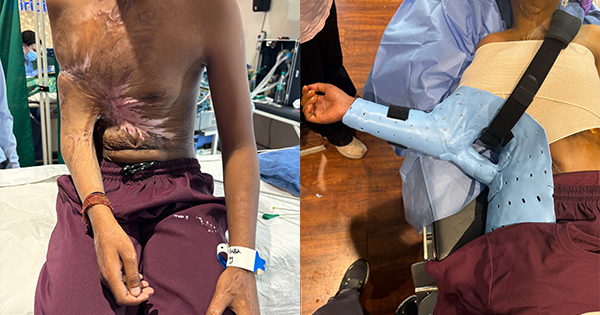
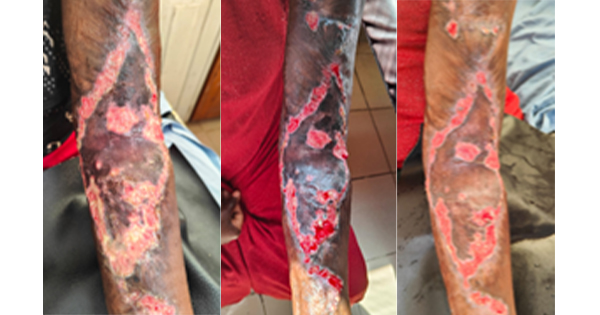
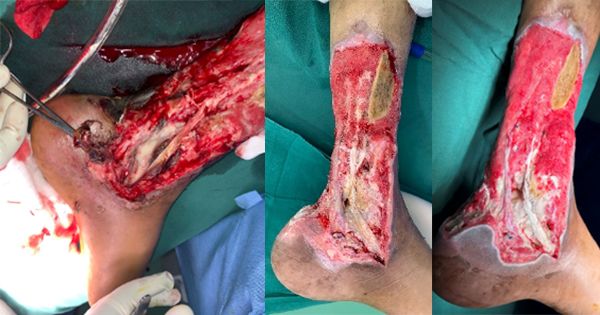
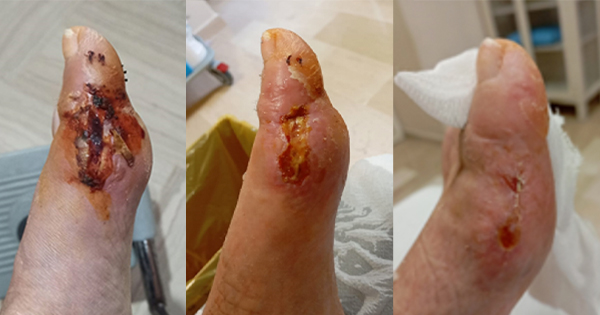
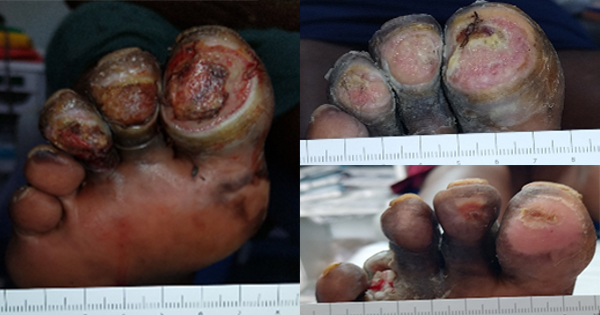
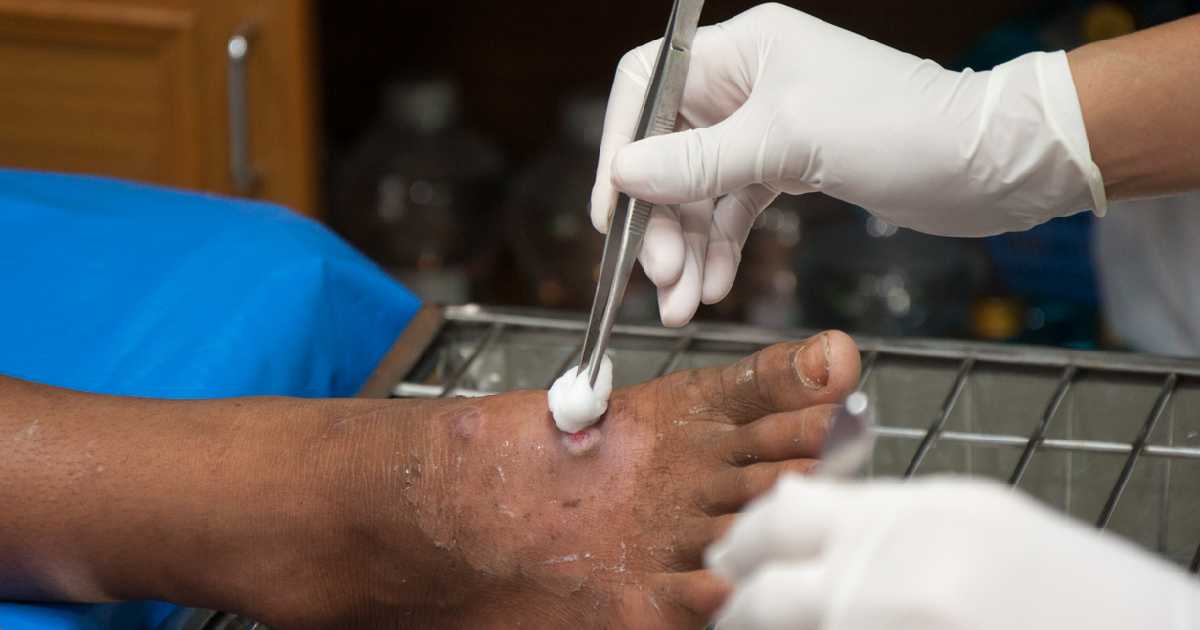
The commonest uses of larval therapy are debridement of chronic wounds (most typically leg ulcers), pressure ulcers, infected surgical wounds, dehisced wounds and diabetic ulcers [Fig 1].


When to use larval therapy
Larval therapy is presently used to treat a variety of acute and chronic wounds in patients, both in hospital and community settings. In the UK as well as in the EU, US and Australia, larval therapy has been used to treat most types of infected, sloughy or necrotic wounds, irrespective of aetiology. Wounds that have been treated with larvae include leg ulcers, pressure ulcers, infected surgical wounds, dehisced wounds and diabetic ulcers as these wounds are usually covered with sloughy, necrotic tissue[16-22].


Larval therapy has also been used as a diagnostic tool to ascertain the extent of tissue damage in an ischaemic wound, and assess if a limb is worth saving[23]. The speed at which the larvae work can often expose the scope of a problem within a few days. In the case of a diabetic foot ulcer, the size of the wound on the surface may mask large quantities of devitalised tissue within the foot itself. Larvae will feed only as far as the dead tissue extends within the foot and will reveal how much healthy tissue is present[24,25].


There are no known systemic medications that interfere with or destroy the larvae whilst they are on the wound (see 'Practical Tips' box above for contraindications).