Wounds International, Vol 1; Issue 4Practice development Preventing skin breakdown in lymphoedema

Preventing skin breakdown in lymphoedema

01/09/10 | Lymphoedema, Skin integrity, Wellbeing and concordance | Mei Fu

Preventing skin breakdown in lymphoedemaLymphoedema following breast cancer treatment is characterised by an accumulation of lymph fluid in the affected limb, leading to abnormal swelling. Meticulous daily skin care forms an integral part of lymphoedema risk reduction and also prevents skin breakdown. This article examines an innovative skin care programme that aims to improve the condition of patients’ skin and prevent skin injury.


INTRODUCTION
Lymphoedema is a major health problem that affects thousands of breast cancer survivors. More than 40% of women treated for breast cancer go on to develop lymphoedema [1-3] and are then affected by the associated psychosocial problems [4,5,6]. A lower quality of life is observed in breast cancer survivors who go onto develop lymphoedema than in those who do not [5,7,8].

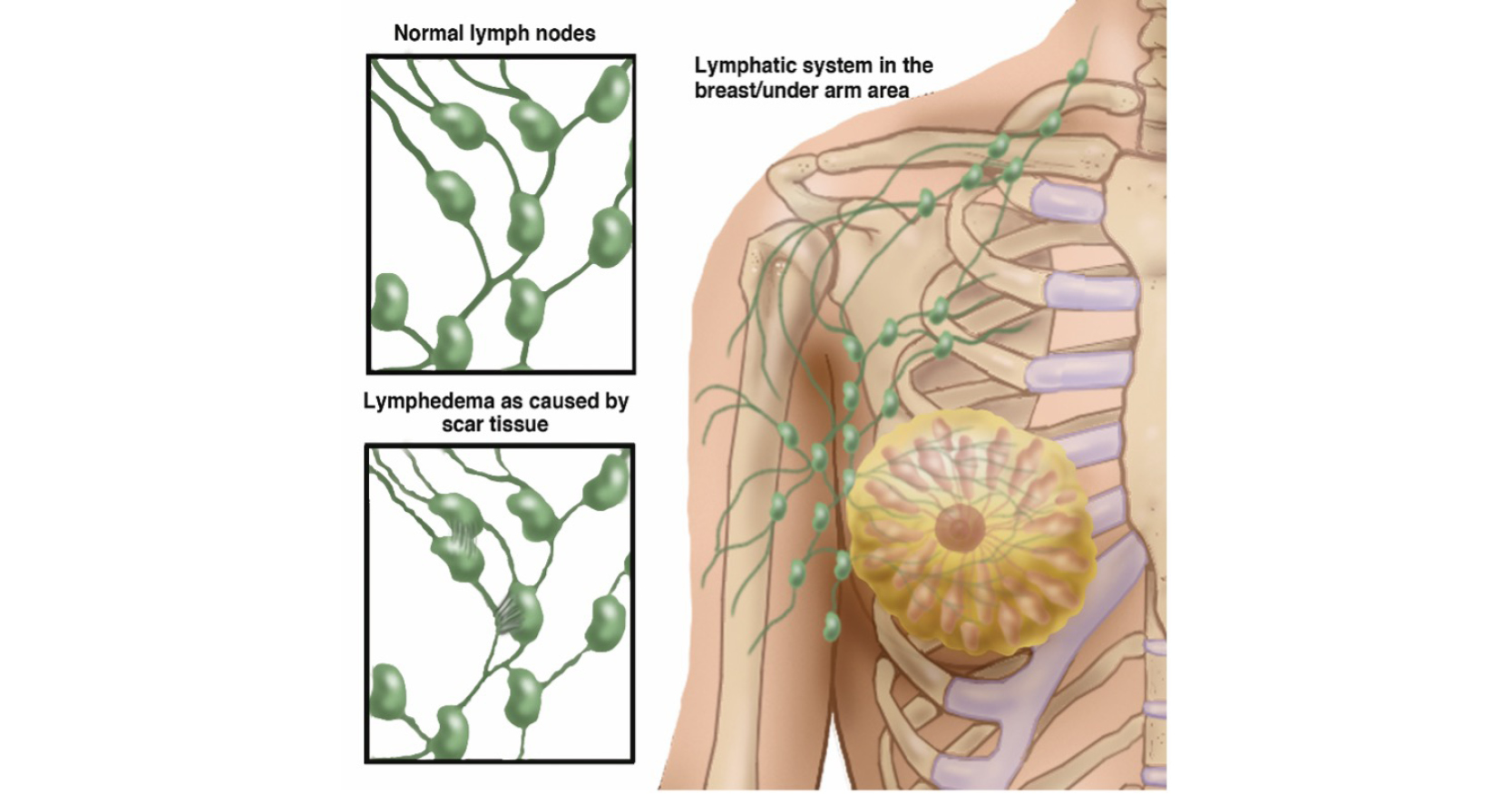
Lymphoedema following breast cancer treatment is characterised by an accumulation of lymph fluid in the interstitial spaces of the affected limb, leading to abnormal swelling and multiple symptoms[1,4], for example repeated cellulitis, infections and lymphangitis. These symptoms represent a huge burden, both in terms of the quality of life of patients, but also on the finances of healthcare services [7]. Meticulous daily skin care forms an integral part of lymphoedema risk reduction.

The role of inflammation in the activation of lymphoedema pathogenesis provides innovative insights into skin care for breast cancer survivors [1-3,8-14]. Breast cancer survivors who undergo surgery and the dissection of lymph nodes and vessels are known to have a compromised lymphatic system. This makes survivors more vulnerable to ineffective lymphatic drainage, inflammation and infection[15]. Inflammation and infection worsen lymphatic drainage, which triggers lymphangiogenesis as the body attempts to resolve inflammation by removing the excess fluid [16,17].

However, lymphangiogenesis that is driven by inflammation only serves to create further inflammation. Breast cancer survivors already have a compromised lymphatic system and as inflammation continues and fluid accumulates, the lymphatic system responds by creating new lymphatic vessels, but because the inflammation has not been resolved, lymphangiogenesis further damages the lymphatic system through expansion of an inflamed lymphatic network, leading to lymphoedema. The lymphatic vessels themselves are not inflamed but the surrounding environment contains inflammatory cytokines [16,18-21].

Besides treatment-related risk, recent research reveals that inflammation/infection is the main predictor of increased limb volume and lymphoedema [1-3,8-14]. Women who had previous inflammation-infection in the breast, chest, or arm were 3.8 times more likely to develop lymphoedema [1,9]. It is important to design a skin care regime for breast cancer survivors by targeting the pro-inflammatory milieu (an internal and external environment that promotes inflammation) to optimise skin condition and prevent skin injuries.


IMPROVING PRACTICE THROUGH RESEARCH
In clinical practice, many breast cancer survivors do not receive any information regarding lymphoedema and risk reduction [22]. Educational and behavioral interventions can ameliorate lymphoedema-related symptoms and promote early detection [23]. Similarly, targeting the proinflammatory milieu on a daily basis by optimising skin condition and preventing skin injuries has the potential to reduce lymphoedema risk.
 
To address this important clinical need, the author's team proposed a pilot research programme aimed at improving clinical practice. The Optimal YOU research programme, which was funded by the Avon Foundation, aims to evaluate the effectiveness of daily behavioural interventions in promoting lymph flow, optimising the condition of patient's' skin and preventing skin injuries.


Page Points

  • Lymphoedema is a widespread problem, with over 40% of women treated for breast cancer going on to develop the condition
  • A skin care regimen for breast cancer survivors needs to target the pro-inflammatory milieu in order to optimise skin condition and prevent skin injury
  • Many breast cancer survivors with lymphoedema do not receive enough information on lymphoedema and protecting their skin