Managing eczema in patients with leg ulcers
01/09/10 | Leg ulcers, Skin integrity, Wellbeing and concordance | Deborah Hofman
Patients with leg ulcers will also often experience skin problems such as eczema. It is important that clinicians are able to offer comprehensive skin assessment, accurate diagnosis and effective management. This article outlines the background to the development of eczema in the lower limb and offers useful practice points for clinicians.
INTRODUCTION
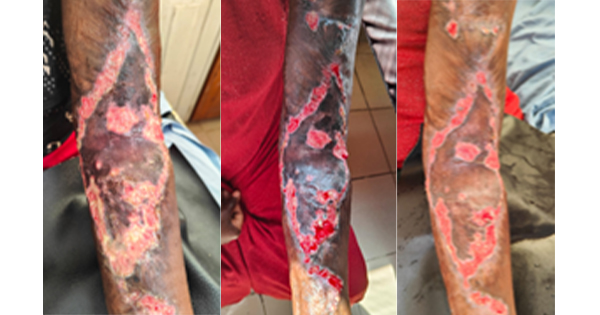
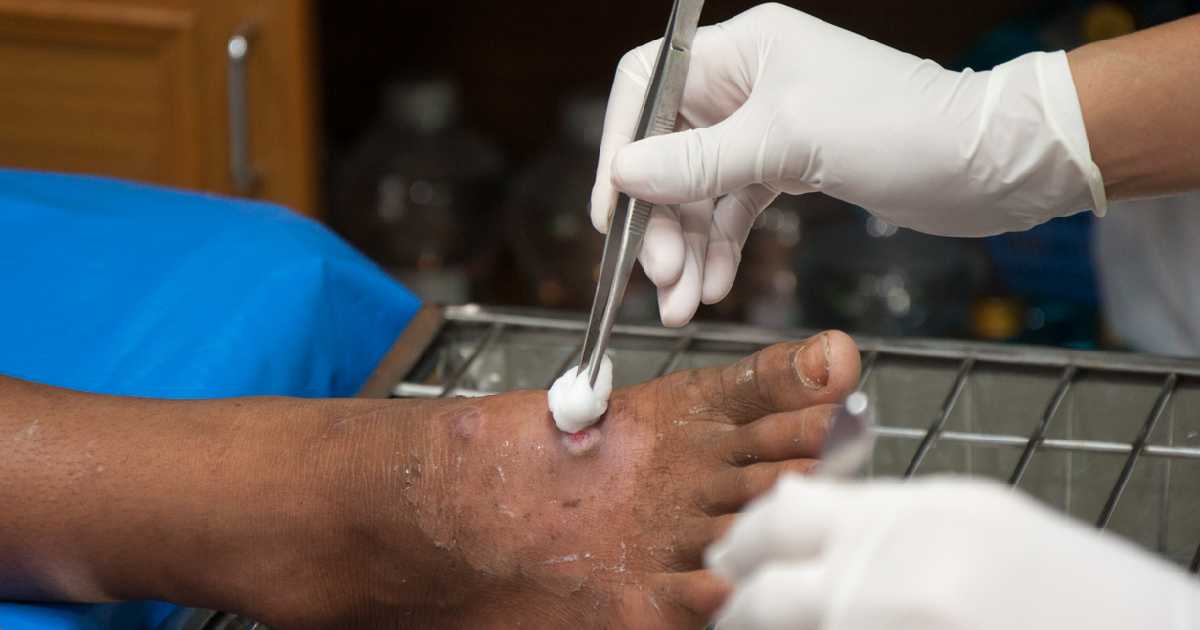
Care of the surrounding skin is often the most problematic aspect of leg ulcer management and can cause the patient greater discomfort than pain from the wound [Fig 1].

Fig 1 - The skin surrounding a wound often causes more problems than the wound itself - in this example eczema has developed as a result of prolonged contact with wound fluid.
Inappropriate skin treatment and dressings can exacerbate skin problems and lead to increased discomfort. Clinicians who manage patients with leg ulcers need to develop expertise in assessing the surrounding skin and be able to recognise when a dermatology referral is necessary.
Leg ulceration is often preceded by skin changes such as oedema, lipodermatosclerosis, discolouration, atrophie blanche, cellulitis and eczema. Prompt intervention can prevent ulcers occurring. These conditions are also frequently present alongside leg ulceration. Recognising these conditions and knowing how to manage them effectively is crucial.
This short report focuses on the management of eczema in patients with an existing leg ulcer and how to distinguish eczema from cellulitis.
ECZEMA
Eczema is inflammation of the epidermis and is characterised by itchy, reddened, dry and cracked skin and may range in severity from mild to severe.
Venous eczema or contact eczema
Eczema of the skin surrounding a leg ulcer may be caused by venous stasis or by contact sensitivity to a product applied to or in contact with the skin (for example, latex, preservatives and adhesives). Patients with venous leg ulcers show a greater tendency towards allergy than the general population [1] and it is important to identify potential allergens by patch testing when contact sensitivity is suspected. Patients may also develop an irritant response to products next to the skin, often through wound exudate, which is not absorbed away from the skin by dressings.
Venous eczema may precede ulceration and early identification of skin changes and prompt treatment may prevent ulceration occurring or deterioration of an existing ulcer. Patients who have eczema on the leg should be asked if they have eczema elsewhere on the body.