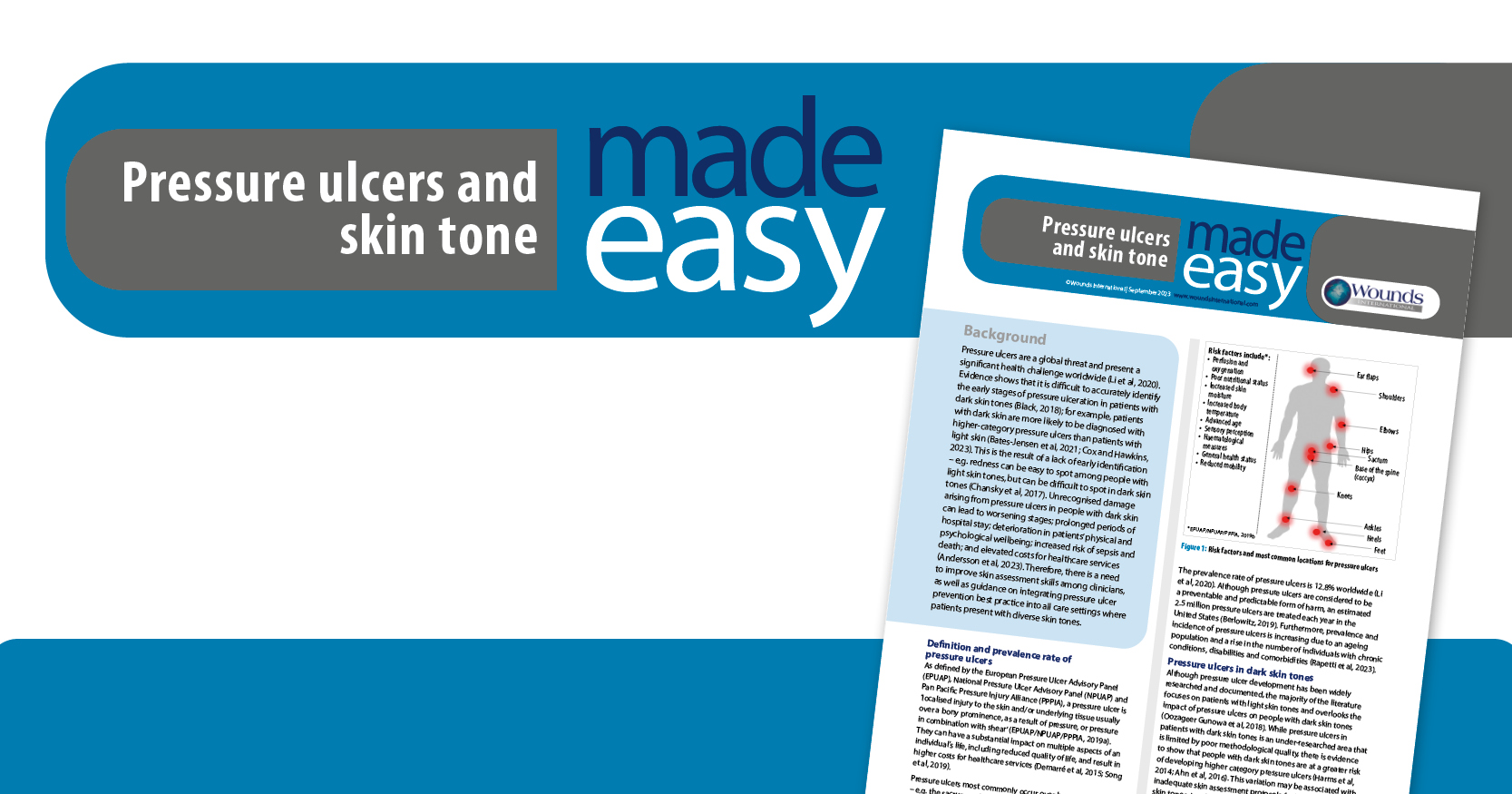
Wounds International 2(3) SeptemberEditorials and reportsRemembering the fundamental principles of pressure ulcer care

Remembering the fundamental principles of pressure ulcer care

01/09/11 | Pressure ulcers

Remembering the fundamental principles of pressure ulcer care We need to make sure the message about pressure ulcers is getting through, says Suzie Calne

As this editorial goes to press I will be attending the 14th annual European Pressure Ulcer Advisory Panel (EPUAP) meeting in Oporto, Portugal. Key opinion leaders will gather and eminent clinicians will present the latest evidence on understanding, assessing, managing and preventing pressure ulcers. Yet despite the abundance of evidence, anecdotal reports and prevalence/incidence data confirm that pressure ulcers remain a major problem across the world. It seems that in many clinical areas, effective assessment and intervention continues to be inadequate.  

Educational literature on the topic of pressure ulcer prevention is plentiful. Good resources can be obtained via organisations such as EPUAP, the National Pressure Ulcer Advisory Panel (NPUAP) in the US and the various national wound management organisations. Wounds International also provides a number of valuable publications on the topic, which are available in multiple languages and freely downloadable (visit www.woundsinternational.com). But there is still a missing link in filtering the right  information to the right individuals, namely the clinicians, patients and carers who have to deal with these wounds on a daily basis.

The paper on p7 by Tania Chianca and colleagues, all wound care professors from Brazil, is a good example and illustrates how the introduction of a structured approach to raising awareness and education can make a difference to practice.

The well known Canadian pressure ulcer initiative described in the launch issue of wounds International by Heather Orsted asserts that central to success is gaining 'buy in' from all involved, including patients. The initiative used posters and eye-catching slogans, such as 'Did you turn me today?', to remind clinicians of the importance of pressure ulcer care.

We still have a lot to learn about pressure damage and how to prevent skin breakdown, but as is so often the case with nursing and medicine, concepts become over-complicated and there is a need to return to the fundamental principles of care.

At the Wounds UK summer conference held back in June, I was fortunate to attend a presentation by John Macdonald a well-known retired cardiovascular surgeon from Miami and a wound care specialist who assisted casualties in Haiti after the earthquake in 2010. He recounted how drawing on simple principles had helped him to lead a largely untrained team to provide immediate and effective treatment in the immediate aftermath of the quake. Even when the team members had little experience of wound care, by adhering to the five basic principles listed below, they were able to save many lives:

  • Enhance systemic conditions
  • Protect the wound from trauma
  • Provide a clean wound base and prevent infection
  • Maintain a moist wound environment
  • Control periwound oedema and lymphoedema.


It is key to be able to impart clear clinical messages to colleagues and facilitate effective care in all contexts.
On a personal note, my own son injured his leg in a biking accident recently, sustaining a deep laceration below his patella, which required extensive surgical debridement and immobilisation of the knee joint using a full leg plaster cast. The wound healed with no complications, but throughout the entire healing period, I was expecting it to breakdown and was pleasantly surprised when all went according to plan. The fact that the clinical team in France applied the five basic principles clearly led to this positive outcome.


While my son is lucky to be a healthy 14-year-old boy with no underlying systemic disease, this is often not the case and the first of the basic principles - enhancing systemic conditions - is obviously the key to success.
While research needs to focus on how we can improve standards consistently, one thing is clear from the Brazilian and Canadian initiatives and the work of John Macdonald in Haiti - individuals with energy and drive can positively impact on the standards of care delivered.

Suzie Calne
Editor, Wounds International

If you would like to contribute to a future issue of the journal, please contact Suzie Calne, the editor of Wounds International at: scalne@woundsinternational.com