Wounds International, Vol 1; Issue 2Case reportsPostoperative management of a diabetic foot ulcer in Saudi Arabia

Postoperative management of a diabetic foot ulcer in Saudi Arabia

09/02/10 | Diabetic foot ulcers | Sarah Bagazi

Postoperative management of a diabetic foot ulcer in Saudi ArabiaThis case study focuses on the postoperative care of a man with a diabetic foot ulcer. It describes the wide-ranging effects that foot ulceration can have on psychological and social wellbeing, and emphasises the need for multidisciplinary care.


INTRODUCTION

In common with many countries of the world, the prevalence of type 1 or type 2 diabetes mellitus in Saudia Arabia is increasing [1,2], and peripheral neuropathy and diabetic foot sepsis are commonly seen complications [3].


CASE REPORT

Mr S is a 76 year-old man who worked as a porter and a driver. He has had type 1 diabetes for 15 years and is receiving medication for hypertension. He is overweight and his diabetes is poorly controlled. He has peripheral neuropathy and has had right ankle Charcot joint damage for approximately one year.

He has also had an ulcer over the right lateral malleolus for about one year. It is likely that pressure from the ordinary shoes he wears has contributed to the development of the ulcer.

He is no longer able to walk and has been seen by a number of doctors who have advised amputation. Mr S has refused to accept this.


Presentation

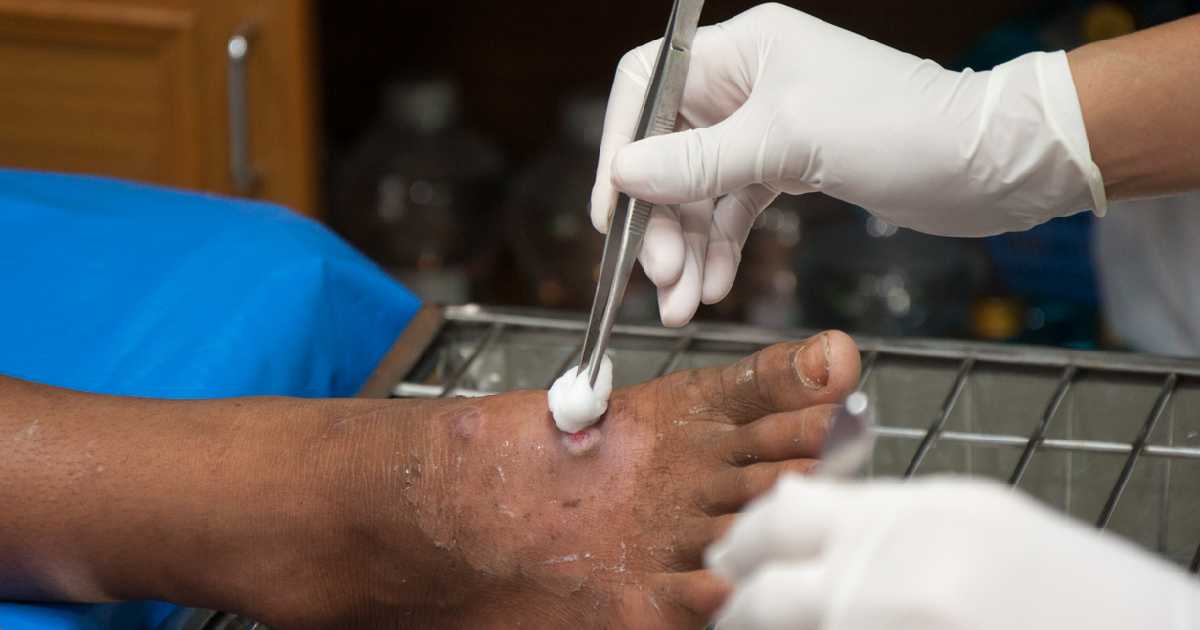
Mr S presented at the accident and emergency department. The ulcer over the right malleolus measured 7x5cm, contained slough and had macerated wound edges. The right ankle was painful and showed classical signs of Charcot arthropathy: heat, erythema, oedema and joint deformity [4]. Pulses were present in both feet, but sensation was lacking on the sole of the right foot. Laboratory investigations revealed raised HbA­1C levels and random blood glucose.

An X-ray of the right ankle showed a Charcot joint with a piece of bone underlying the ulcer site. MRI revealed a collection of fluid in the right ankle joint, but no sequestrated osteomyelitis.

After a detailed explanation of the cause of his problems, Mr S agreed to surgical removal of the bone fragment. Under general anaesthesia, the bony fragment was removed, the ankle joint was washed out and the wound debrided. Postoperatively, he was fitted with a below-knee slab and admitted to a surgical ward. As the patient's diabetes was poorly controlled, Mr S was referred to the endocrinology team, diabetic educator and dietitian.
 

Page Points

  • A 76 year old man with poorly controlled type 1 diabetes and Charcot arthropathy presented with a diabetic foot ulcer over the right malleolus
  • Treatment included surgical removal of a bone fragment underlying the ulcer site and referral to the endocrinology team, diabetic educator and dietitian for management of his diabetes