Managing a neuropathic diabetic foot ulcer in rural Australia
09/02/10 | Diabetic foot ulcers | Jane Jeavons
This case study highlights some of the issues involved in managing a patient with a neuropathic diabetic foot ulcer in rural Australia, and explores the importance of concordance, patient and healthcare professional education and a multidisciplinary team/clinic approach.
INTRODUCTION
In Australia, healthcare is provided by both government and private agencies. Australia Medicare is a federal government agency that entitles all Australians access to free or low cost healthcare. The federal government also supports The Pharmaceutical Benefits Scheme (PBS), which ensures that a wide range of essential medicines is affordable by and accessible to all Australians [1].

Over one million Australians are affected by type 2 diabetes [2]. It has been estimated that 19.6% of people with diabetes are at risk of a foot ulcer [3] and that diabetes accounts for about half of all non-traumatic amputations [4]. The total direct cost for amputations in Australia is approximately AU$44 million annually [5].
CASE STUDY
Mr O is a 61 year-old married gentleman who is a retired publican. He was diagnosed with type 2 diabetes at the age of 26 years. Insulin was added to his oral antidiabetic medication a year later. Unfortunately, his diabetes has been poorly controlled. He is obese, smokes, has a long history of alcohol abuse and has multiple comorbidities.

Mr O has a history of venous leg ulcers and neuropathic foot ulcers. He has Charcot arthropathy of the left foot and currently has a left midfoot plantar ulcer following surgery for an abscess (Figs 1 and 2).
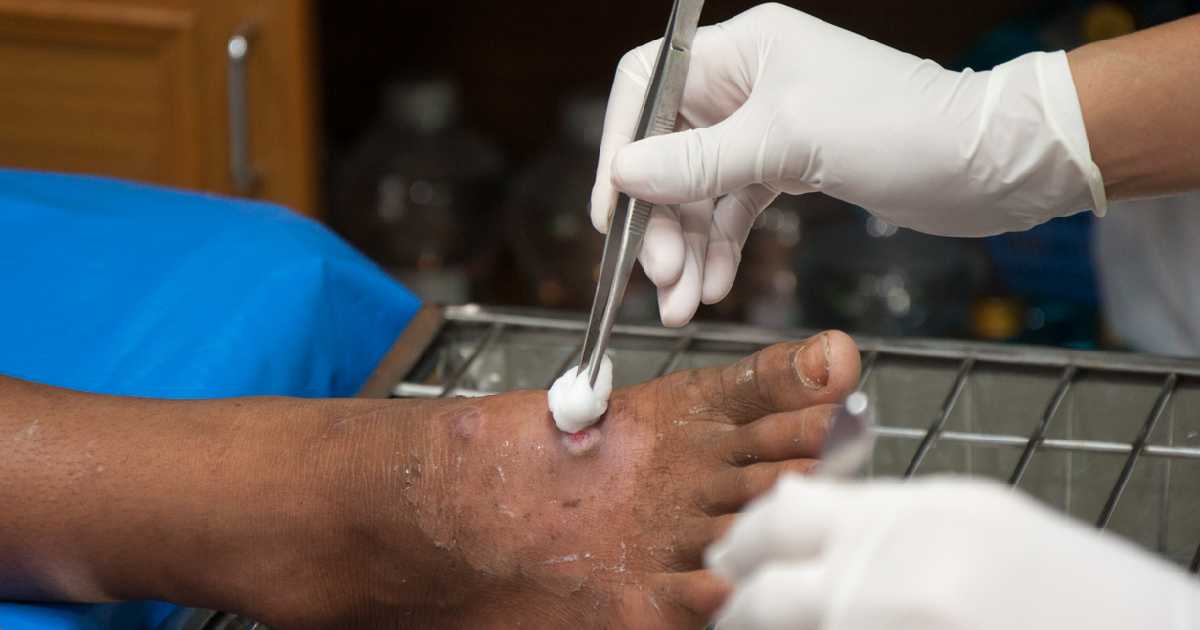
Fig 1: Left midfoot plantar ulcer

Fig 2: Charcot arthropathy of the left foot
Since surgery almost a year ago, the ulcer has slowly decreased in size. A considerable amount of callus forms a rim around the wound. There is granulation tissue in the base of wound, some evidence of epithelialisation, and moderate haemoserous exudate. There is no odour, pain or sign of infection. A podiatrist debrides the ulcer regularly. The ulcer is dressed with a silver impregnated hydrocolloid dressing and a non-occlusive covering.
Page Points
- In Australia, approximately 20% of patients with diabetes are at risk of a diabetic foot ulcer
- This case study reports on a 61 year old man with poorly controlled type 2 diabetes and Charcot arthropathy. He presented with a persistent left midfoot plantar ulcer following surgery one year previously