Case reportsDiabetic foot care training in developing countries: Addressing the skills shortage

Diabetic foot care training in developing countries: Addressing the skills shortage

Service development and delivery | Sue Tulley, Ali Foster, Margreet van Putten, Vilma Urbancic-Rovan, Karel Bakker

Diabetic foot care training in developing countries: Addressing the skills shortageThe growing prevalence of diabetes is accompanied by increases in the number of diabetic complications, including those of the foot. This will especially affect developing countries, where the percentage of the population with diabetes is rapidly out-pacing that in the developed world. With only 19 countries worldwide having licensed schools of podiatry, and trained podiatrists operating in approximately 35 countries, a large shortfall of podiatry services exists globally. To address the resultant skills shortage in diabetic foot care, the International Working Group on the Diabetic Foot established the Diabetic Foot Care Education Working Group to develop a programme to train accredited diabetic foot care assistants in developing countries.

Worldwide, there are more than 246 million people living with diabetes (International Diabetes Federation [IDF], 2007). Diabetic foot disease is a threat to every person with diabetes, and is the most common cause of admission to hospital for people with the condition (IDF, 2005). The ultimate consequence of diabetic foot disease is that more than one million lower-limb amputations are performed annually (Boulton et al, 2005).


   In developed countries, one in every six people with diabetes will develop an ulcer during their lifetime (Boulton et al, 2005). In developing countries, foot problems related to diabetes are thought to be commoner still. Belhadj (1998) reported a clinic-based study in Algeria and found an ulcer prevalence as high as 11.9%. Given that the IDF (2005) finds up to 85% of amputations resulting from diabetic foot disease to be preventable, these figures are unacceptably high. Furthermore, the prevalence of diabetes globally is growing annually and is expected to reach 5.2% by 2025, up from 4.1% in 2007 among those aged 20–79 years (IDF, 2007). Without action, global rates of diabetic foot disease, and the amputations associated with its poor management, will increase alongside this forecasted rise in the prevalence of diabetes.
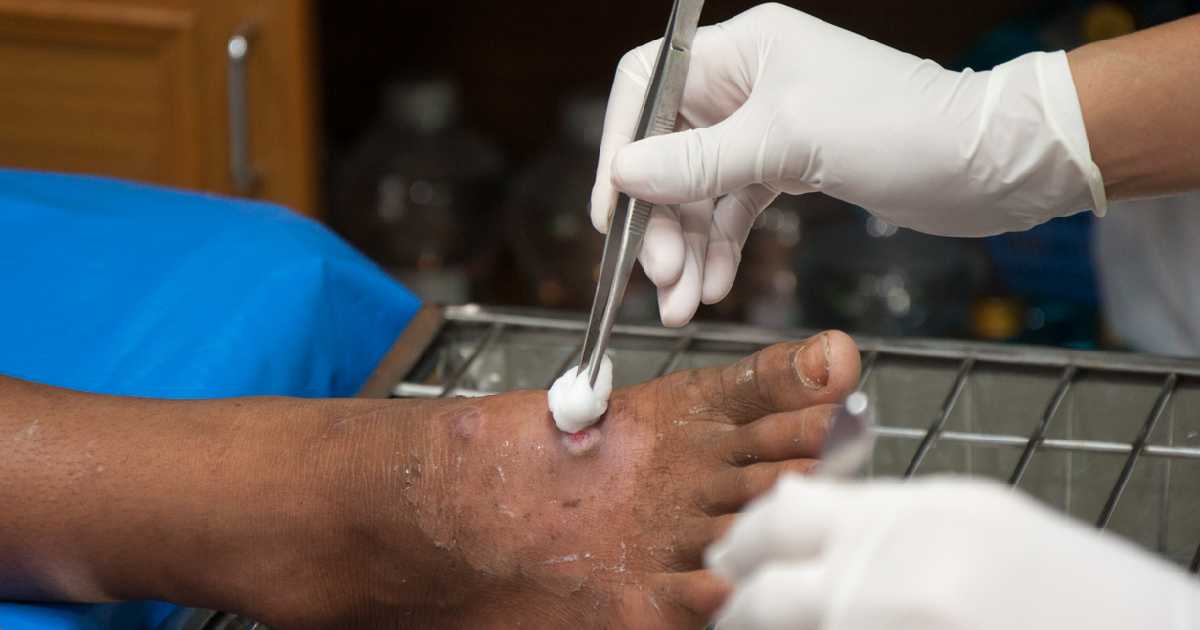

   The treatment, and subsequent care, of people with diabetic foot disease has a significant impact on healthcare budgets, while poor treatment, or no treatment at all, can have a potentially devastating impact on the lives of individuals and their families. This is particularly the case in places where access to health care is restricted, and awareness of diabetic foot disease is low.



   To address concerns regarding the variations in the standard of diabetic foot care between countries, the International Working Group on the Diabetic Foot (IWGDF) established the Diabetic Foot Care Education Working Group (DFCEWG) in September 2007. The DFCEWG developed a proposal for training diabetic foot care assistants in countries that do not have a podiatry service (IWGDF, 2008). In this article, the authors discuss the need for such a programme, the nature of the courses to be offered and plans for its implementation.

Page Points

  • The growing prevalence of diabetes is accompanied by increases in the number of diabetic complications, including those of the foot. This will especially affect developing countries, where the percentage of the population with diabetes is rapidly out-pacing that in the developed world. With only 19 countries worldwide having licensed schools of podiatry, and trained podiatrists operating in approximately 35 countries, a large shortfall of podiatry services exists globally. To address the resultant skills shortage in diabetic foot care, the International Working Group on the Diabetic Foot established the Diabetic Foot Care Education Working Group to develop a programme to train accredited diabetic foot care assistants in developing countries.